Feeding Therapy in New Rochelle, New York
Support for children with feeding challenges, from first bites to calmer mealtimes.
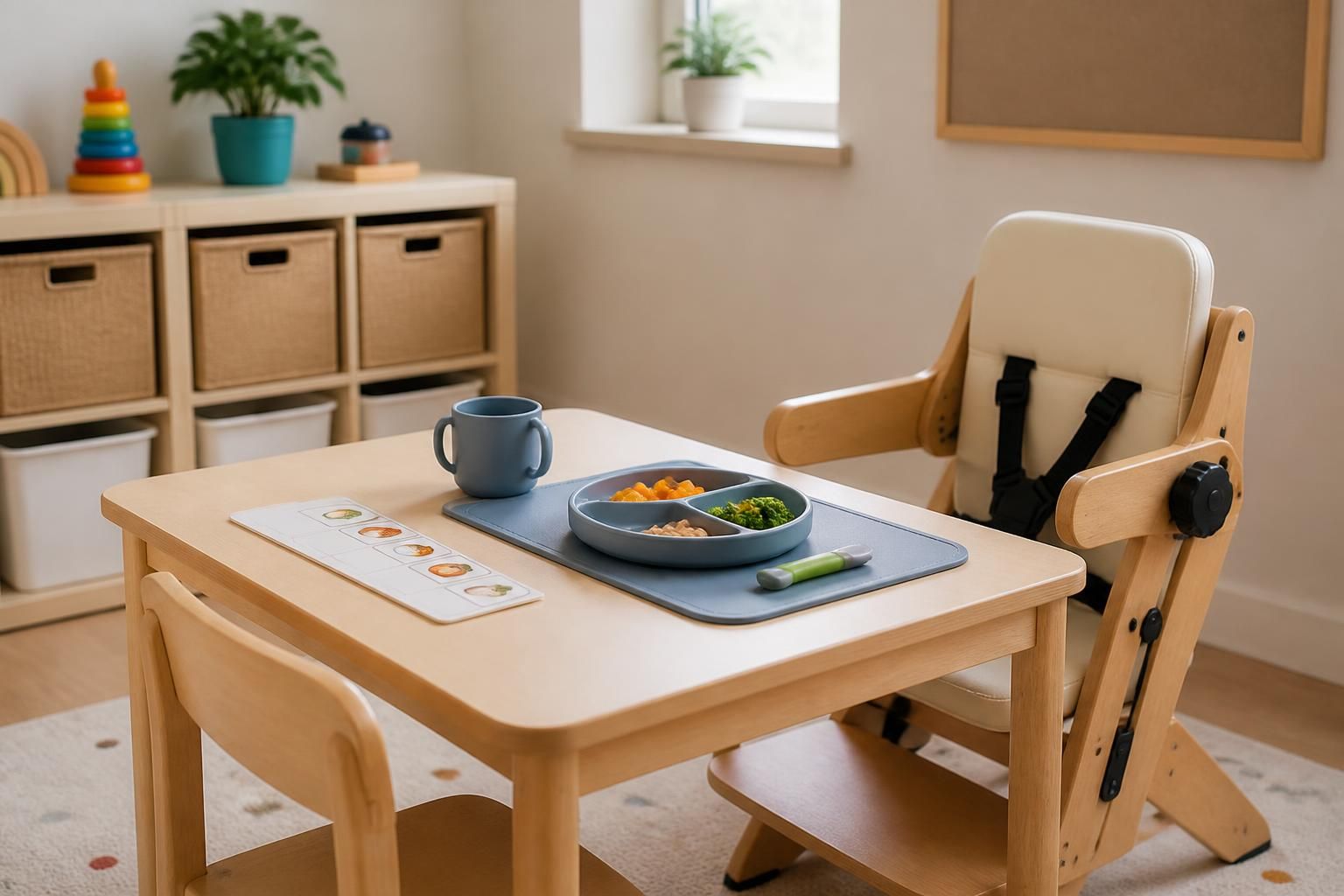
Support for children with feeding challenges, from first bites to calmer mealtimes.
Mealtimes can turn stressful fast when a child gags, refuses textures, eats only a few foods, or seems upset around spoons, cups, and plates. When feeding feels tense at home, every snack and meal can become a struggle for both children and caregivers.
Feeding Therapy from Seedlings Therapeutic Services gives families in New Rochelle, New York a clear next step. We work with young children who need support with oral-motor skills, sensory responses, mealtime routines, and the confidence to explore food at their own pace.
Feeding therapy focuses on the skills and comfort a child needs to eat and drink with less stress. For some children, the challenge is chewing or moving food safely. For others, the challenge is the smell, texture, temperature, or look of food on the plate.
At Seedlings Therapeutic Services, feeding support is shaped around the child and the family’s daily routine. That means we look at how your child eats at home, what mealtimes look like, and which small changes can make food feel less overwhelming.
Some children are selective eaters for a short phase. Feeding therapy may be worth exploring when the pattern lasts, expands, or starts affecting everyday routines. A child may not have the words to explain what feels hard, so behavior at meals often tells the story.
Your child eats only a narrow group of foods and reacts strongly when new foods are offered.
Your child avoids certain textures, gags at the sight of some foods, or resists messy hands and faces.
Meals take extra time because your child freezes, pushes food away, or needs repeated encouragement.
You notice pocketing, coughing, spitting, or trouble handling foods that need more chewing.
Your child has trouble using a cup, straw, or bottle transition, or seems unsure how to manage liquids.
Mealtimes are becoming a source of worry, frustration, or constant negotiation.
At Seedlings Therapeutic Services, feeding therapy is tailored to what your child can tolerate right now. We start with small, realistic goals so progress feels manageable for the child and useful at home.
We may work on oral awareness, biting, chewing, tongue movement, utensil use, or drinking skills, depending on the child’s needs. The goal is not to rush through foods. It is to help the child build comfort and control one step at a time.
Some children need help tolerating the feel, smell, or appearance of foods before they can eat them. We use gradual exposure and child-led activities so new experiences feel less threatening.
We help caregivers understand which mealtime responses may be making things harder and which strategies can reduce pressure. Small changes to timing, seating, presentation, and interaction can make a meaningful difference.
Feeding therapy works best when it reflects real life. That is why services are shaped around the child’s home routine and daily eating habits. Parents and caregivers are part of the process, not just observers.
A typical visit may include observation, guided play, child-friendly food exploration, and simple coaching for the adult who helps with meals. We pay attention to the child’s signals and adjust the pace so sessions remain supportive and practical.
Every child comes to feeding with a different history. Some are cautious by nature. Some have medical or developmental factors that affect how eating feels. Others have learned to protect themselves from uncomfortable sensations by avoiding food altogether.
Seedlings Therapeutic Services uses an individualized approach for each child because no single feeding plan fits every family. We consider development, communication, behavior, and sensory needs together. That broader view helps us support real progress, not just compliance at the table.
Feeding concerns often show up early, especially during the transition from bottle or breast to purees, soft solids, and more varied textures. Early support can help families build positive routines before mealtime stress becomes the norm.
When feeding challenges are part of a larger developmental picture, therapy can work alongside speech, occupational therapy, physical therapy, special instruction, or ABA therapy as appropriate. Coordinated support can make it easier for a child to generalize new skills across everyday routines.
Caregiver support matters just as much as child practice. A calm, consistent approach at home can help reduce pressure around meals and make progress more sustainable. We talk through what to say, what to avoid, and how to respond when your child hesitates or refuses.
Parent coaching may focus on:
For many families, this guidance is what turns therapy gains into everyday changes at home.
If feeding concerns are part of your day-to-day life, Seedlings Therapeutic Services can help you take the next step. Families in New Rochelle, New York often reach out when meals are taking too much energy, a child’s food choices are shrinking, or eating feels harder than it should for a young child.
We begin by learning what is happening, what your child avoids, and what feels most urgent for your family. From there, we create a plan that matches your child’s needs and your household routine.
Our home-based early childhood intervention model allows support to happen where mealtime skills are used most. That can make strategies easier to understand, easier to practice, and more useful throughout the week.
Feeding therapy is often helpful for young children from birth to age 3 who show strong food refusal, delayed eating skills, or sensory-related mealtime stress.
No. Feeding therapy can also help children who gag, cough, struggle with chewing, avoid textures, resist utensils, or have trouble with cups and straws.
Not always. The first goal may be comfort, safety, and skill-building around food before expecting a child to expand their diet.
Yes. Caregiver participation is an important part of feeding therapy because mealtime routines continue at home between visits.
That is okay. Therapy can begin with tolerating food near the child, touching it, smelling it, or exploring it in a low-pressure way.
If meals feel consistently stressful, food variety is shrinking, or eating seems physically or emotionally difficult, feeding therapy may be a helpful place to start. You can reach Seedlings Therapeutic Services by phone at +19143395511 or email at info@seedlingstherapy.com to learn more.

Take The Next Step
If you are concerned about your child’s growth, communication, movement, or daily routines, we are here to help you explore services that fit your family.